


Imposter Game - Party Edition
4.7113.00 Reviews
App Specs
- Version
- 4.2.3
- Updated On
- License
- Free
- Downloads
- 1,000,000+
- Developer
- Sven Vucak
- Categories
- Word
- Platform
- Android
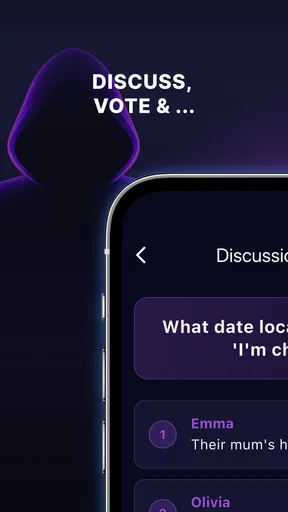
Screenshots



 Analysis by AppCompare
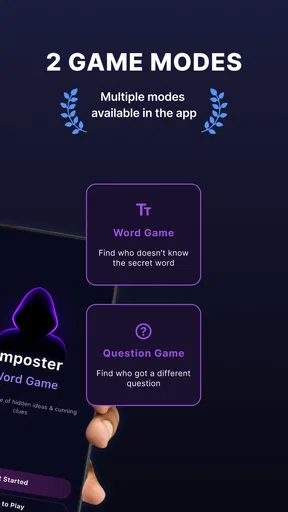
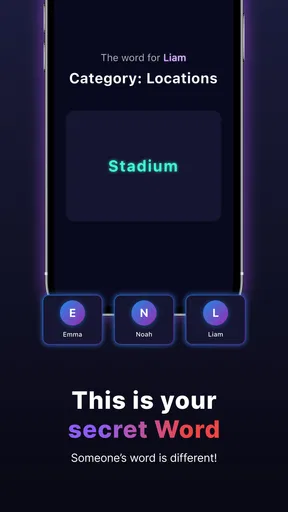
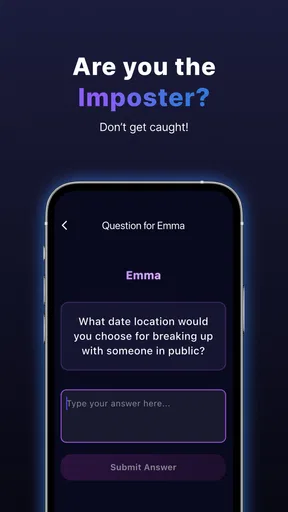
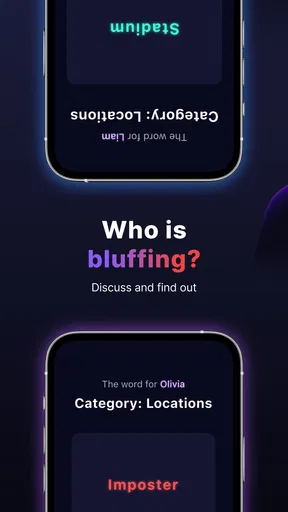
I’d treat Imposter Game - Party Edition as a word-and-bluff party game, not as a solo puzzle or a full-scale online multiplayer adventure. Its appeal is the conversation around the table: players try to give clues without making the answer too obvious, while one person attempts to blend in. That simple premise can turn a quiet get-together into a lively guessing game, provided your group enjoys teasing out what people mean and defending their choices.
The first thing I’d do after installing it is gather the players before opening the game. This works best when everyone can hear the clues and follow the same round together, so it’s worth choosing a comfortable spot and agreeing to keep phones from distracting the group. The game is free, and its Everyone age rating makes it a straightforward option for mixed-age gatherings. The developer is Sven Vucak, and the current version is 4.2.0; Android devices need version 5.0 or later.
Make the first round easy to follow
For a first session, resist the urge to turn every clue into a performance. Agree on a simple order for speaking, make sure each person understands when to give a clue, and keep the first round relaxed. The point is not to catch a newcomer out for hesitating; it is to help everyone learn how much information a useful clue can contain without giving away too much.
A good first success is a round where the group can explain why a clue sounded convincing—or suspicious—after the reveal. That conversation is often more entertaining than the accusation itself. If your friends are shy, let them give short clues and avoid putting anyone on the spot for a long speech. Once people understand the rhythm, they tend to become more playful naturally.
What makes the bluffing work
The most interesting decisions are small. A clue that is too specific may expose someone who does not know the shared word, while an overly vague answer can make an informed player look evasive. I’d listen for whether a clue fits the group’s general direction, not just whether it sounds confident. The loudest person is not automatically the best detective, and a quiet player may simply be choosing words carefully.
There is also a useful social lesson in how the group handles suspicion. If everyone piles onto the first awkward answer, the round can become less about deduction and more about who is comfortable arguing. Give each player a chance to explain their clue before deciding, especially in a group with mixed experience. That small house rule keeps the game welcoming without removing the tension that makes bluffing fun.
Where it fits among party games
Compared with word-guessing games where one person gives clues and a team races toward a known answer, this format gets its energy from uncertainty about who has the same information as everyone else. It is also less dependent on elaborate equipment than a board game, which makes it easy to bring out during a casual visit. The trade-off is that the fun relies heavily on people talking and paying attention; if your group prefers quiet individual play, a crossword or solo word puzzle will be a better fit.
Worth Reading Before You Choose

Flipboard Shows What News Apps Must Do Beyond the Feed

Switching to Android Auto Means Rethinking Your Driving Routine

Google Calendar Makes a Crowded Week Easier to Manage

Ludo King Makes the Most of the Minutes Between Plans

Baby Panda World Brings Quick Play to Modern Phones, but Its Game Library Feels Busy

ESPN’s Live Game View Makes Following Close Games Easier
It suits friends who enjoy playful suspicion, family gatherings where everyone can take turns, and small breaks between other activities. It is a weaker choice for a group that does not know one another well, has no shared language for discussing clues, or would rather compete on quick vocabulary knowledge. I’d also choose a different kind of party game if people want a physical challenge or a game that does not put anyone’s improvisation under the spotlight.
Getting Started with Imposter Game - Party Edition
First things first, downloading and setting up the Imposter Game - Party Edition is a breeze. Available for both Android and iOS, you can find it in your respective app stores with just a quick search. Once downloaded, the app’s interface is intuitive, making it easy for even the most tech-averse among us to navigate.
As you launch the app, you’re greeted with a vibrant and engaging home screen that sets the tone for the fun ahead. The setup process is quite straightforward: create a game room, invite your friends, and you’re ready to dive into a world of mystery and intrigue.
The Thrill of the Game
The core mechanics of the game revolve around players assuming roles as either crewmates or the dreaded imposters. As a crewmate, your task is to complete various mini-tasks while staying vigilant for any suspicious behavior. On the other hand, if you’re an imposter, your goal is to sabotage the mission without getting caught. Trust me, the adrenaline rush as you try to deceive your friends (or catch them in the act) is unparalleled.
What I love most about this game is the variety of tasks and maps available. Each game session feels fresh and exciting, keeping players on their toes. The developers have done a fantastic job at balancing the tasks, ensuring that neither the imposters nor the crewmates have an undue advantage.
Graphics and Sound Design
Now, let’s talk about aesthetics. The graphics are simple yet charming, with a colorful and cartoonish style that adds to the game's light-hearted nature. It doesn’t try to be overly realistic, which is perfect for a game that’s all about fun and deception.
The sound design is equally impressive. Subtle audio cues enhance the tension, especially when you hear a crewmate being eliminated. The ambient sounds and catchy background music create an immersive experience that draws you into the game's world.
Playing with Friends
The social aspect of this game is where it truly shines. Playing with a group of friends, either locally or online, is where the magic happens. The app supports voice chat, allowing for real-time communication and banter. There’s nothing quite like the thrill of accusing your best friend of being the imposter and watching them squirm under the pressure.
Plus, the game offers a variety of customization options. You can tweak the rules, adjust the number of tasks, and even change the map settings to suit your group’s preferences. This flexibility ensures that every game session is tailored to your liking.
Replayability and Updates
One of the most impressive features of the Imposter Game - Party Edition is its replayability. Each game is unique, thanks to the different dynamics and strategies employed by players. The developers are also continually updating the app, adding new maps, tasks, and features based on user feedback.
This commitment to improving and expanding the game keeps the community engaged and ensures that you’ll always have something new to look forward to. Whether you’re a seasoned player or a newbie, the game offers something for everyone.
There is one practical trade-off to keep in mind before you make it the evening’s main event: this kind of game needs a group that is willing to participate, not just a phone holder and a few passive spectators. If people arrive at different times, start with a quick explanation and let latecomers watch a round before joining. That is less awkward than interrupting a clue sequence to teach the rules, and it gives new players a chance to see how the group handles accusations.
Turn a casual gathering into a good first session
Picture a few friends waiting for food or settling in before a movie. Rather than asking everyone to learn a complicated game, you can use a short round as an icebreaker: explain the basic idea in plain language, take turns giving clues, then talk through the reveal. Keep the first discussion light. The goal is to get people comfortable listening closely, not to prove that one person is a master of deception.
For a mixed group, I’d avoid letting inside jokes dominate the clues. A clue only helps the table if most players can interpret it, and private references can make an otherwise fair deduction feel arbitrary. If someone uses an obscure reference, ask them to explain it after the round rather than letting it decide the vote. This is a small adjustment, but it makes the game easier for newcomers and keeps the focus on the wordplay.
Another useful habit is to notice the difference between a clue that is cautious and one that is empty. A player who gives a restrained clue may be trying not to reveal too much, while someone with no useful information may stay generic for a different reason. Instead of voting based on one answer, compare each clue with what the others have said. The game is more satisfying when the group builds a case from several details rather than treating confidence as proof.
Questions worth settling before you play
Will everyone need their own phone? The easiest plan is to check how your group will share the game before starting, then follow the app’s on-screen setup together. I would not assume that every player needs a separate device or that a particular connection method is required; the important first step is to open the game and make sure the people around you understand how the round will proceed.
Does it work for people who have never played this style of game? Yes, the central idea is approachable, but a first-timer may need one practice round to understand how careful a clue should be. Let them watch the first reveal if they prefer, then invite them in without making their early guesses the center of attention. The learning curve is social rather than technical: people are figuring out the group’s clue style and how direct they can be.
Is it a good choice for a large gathering? It can be a fun centerpiece when the group can hear and respond to one another, but a very large or noisy room can make every clue harder to follow. In that situation, splitting into smaller groups or choosing a game that supports more people at once may work better. The same applies when guests are spread across different places: a conversation-led party game is naturally easier when everyone can take part in the same exchange.
Know when another game is the better pick
The word format gives Imposter Game - Party Edition a different feel from trivia: players are not simply trying to recall facts, and a less encyclopedic player can still contribute through observation and careful phrasing. It also differs from a standard word-association game because the tension comes from deciding who may not share the same information. That makes it especially appealing to groups who like reading social cues, but less suitable for anyone who dislikes bluffing or being questioned in front of friends.
If your group wants a calm activity that can be played without discussion, choose a solo word game instead. If you want a party game built around drawing, acting, or physical movement, this one may feel too dependent on conversation. And if your friends tend to take accusations personally, agree in advance that suspicion is part of the round, not a judgement about anyone outside the game. I find that simple boundary matters more than clever tactics for keeping the mood friendly.
The game is free to download, with optional in-app purchases ranging from $2.99 to $5.99 per item. That gives you a chance to try the basic experience before deciding whether to spend anything. I’d start with the free version at an actual gathering rather than buying extras in anticipation; you will quickly see whether your group enjoys the clue-and-bluff format enough to make further purchases worthwhile. It has a 4.8 average from around 6,200 ratings, and more than 500,000 installs, while its Everyone rating makes it suitable for a broad audience.
My verdict after weighing the fit
What I’d recommend most is treating this as a social tool rather than expecting the app to carry the whole evening. Its strongest moments come from friends noticing a strange word choice, reconsidering an early assumption, and laughing about the explanation afterward. Its weakest moments are predictable too: people talking over one another, clues that only make sense to one person, or a group that would rather watch than take part. Setting expectations before the first round prevents those problems from being mistaken for flaws in the basic idea.
For a first-time player, the safest path is simple: install it, bring the group together, explain the clue-and-bluff premise, and play one relaxed round before adjusting anything. Keep the conversation fair, give newcomers room to learn, and decide afterward whether the group wants another go. Sven Vucak’s word-party game is a strong choice for friends and families who enjoy light deduction and lively discussion, but it is not a universal fit for every gathering. If that sounds like your crowd, I’d give it a try; if not, a quieter word puzzle or a more active party game will serve you better.
In conclusion, if you’re on the lookout for a game that combines fun, strategy, and a bit of mischief, the Imposter Game - Party Edition is a must-try. It's the perfect way to enhance your social gatherings, providing endless hours of entertainment and laughter. So gather your friends, download the app, and let the games begin!
Pros
- Engaging multiplayer gameplay.
- Simple controls for all ages.
- Regular updates with new content.
- Fun graphics and animations.
- Cross-platform play available.
Cons
- Can be repetitive over time.
- In-app purchases can be pricey.
- Occasional server issues.
- Limited single-player mode.
- Ads can be intrusive.
FAQs for Imposter Game - Party Edition
What is the main objective of Imposter Game - Party Edition?
The primary goal in Imposter Game - Party Edition is to either complete all tasks as a crewmate or sabotage the mission as an imposter. Players must use strategy and teamwork to identify imposters or, if playing as an imposter, blend in with crewmates to win.
How many players can join a single game session?
Imposter Game - Party Edition supports multiplayer sessions with up to 10 players. This allows for a dynamic and engaging experience, as players must communicate effectively to identify imposters while completing tasks, making it ideal for parties or online gatherings.
Are there in-app purchases in Imposter Game - Party Edition?
Yes, the game offers in-app purchases. These typically include cosmetic items such as skins, hats, and pets that enhance the visual experience. However, these purchases do not affect gameplay or provide any competitive advantage, ensuring fairness for all players.
Is an internet connection required to play Imposter Game - Party Edition?
An internet connection is required for online multiplayer sessions. However, the game also offers local multiplayer options where players can connect over the same Wi-Fi network. An internet connection enhances the experience by allowing players to join games with friends or strangers worldwide.
What are the age recommendations for playing this game?
Imposter Game - Party Edition is generally recommended for players aged 10 and up. The game involves strategy, deception, and social interaction, which may require a certain level of maturity. Parents should consider whether the game’s content and mechanics are suitable for their children.


